

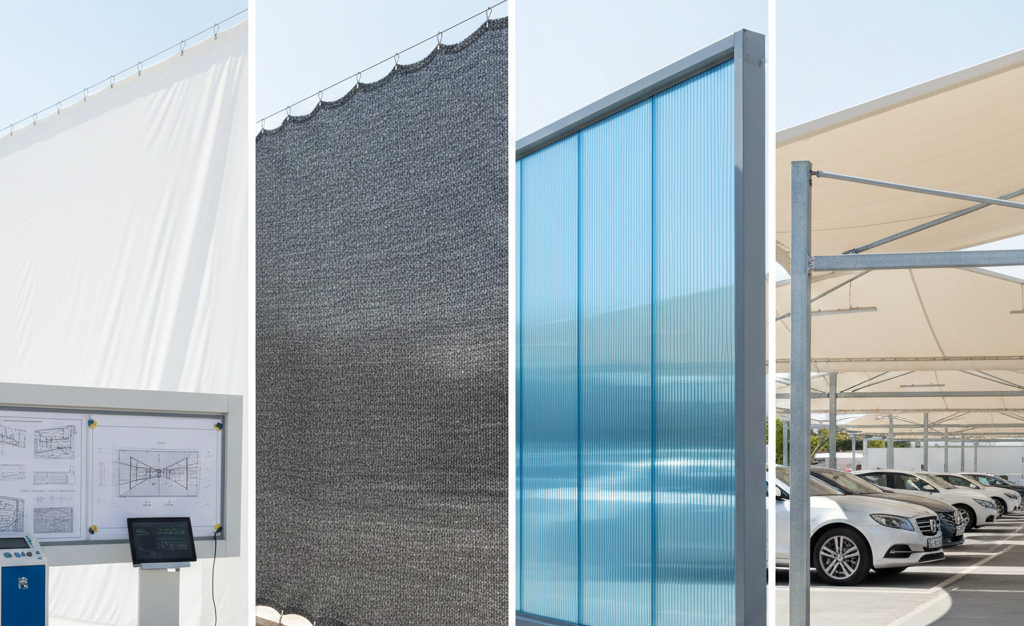
Material selection critically impacts your parking shade’s performance, lifespan, maintenance requirements, and cost. Understanding material properties helps you make informed decisions.
HDPE (High-Density Polyethylene) Fabric
The Industry Standard for UAE Car Parking Shades
HDPE represents the most popular material choice for car parking shades in the UAE, offering an excellent balance of performance, durability, and cost-effectiveness. This woven polyethylene fabric dominates 70-80% of residential and commercial installations.
Manufacturing Process: High-density polyethylene strips are woven into shade cloth using industrial looms, creating a strong yet breathable fabric. UV-stabilizing additives are integrated during manufacturing, and the fabric may be colored using UV-resistant pigments. Finally, edge taping and reinforcement are applied to prevent fraying and ensure longevity.
Technical Specifications:
Weight (GSM – Grams per Square Meter):
- 180-220 GSM: Budget grade (not recommended for UAE – deteriorates within 3-4 years)
- 250-280 GSM: Standard grade (acceptable for budget-conscious projects, 5-6 year lifespan)
- 300-320 GSM: Premium grade (Al Bader Tents’ minimum standard, 8-10 year lifespan)
- 340-350 GSM: Ultra-premium (commercial projects, 10-12 year lifespan)
UV Protection: 95-98% UV blockage (depending on GSM and color), Dark colors (green, blue, red) typically provide slightly better UV blocking than lighter colors
Shade Density: 85-95% (allows some air circulation preventing fabric ballooning in wind)
Tensile Strength: 2,200-3,000 N (varies by GSM), Strong enough to resist wind loads up to 120+ km/h when properly installed
Water Resistance: Breathable fabric allows moisture to pass through, preventing water pooling, Not fully waterproof but 90-95% water repellent
Fire Rating: Class B or Class C (varies by manufacturer), Fire retardant treatments available for commercial projects
Temperature Resistance: Operates effectively from -20°C to +70°C, ideal for UAE climate
Color Options: Standard: Green, beige, blue, red, white, sand, grey, Custom colors: Available with minimum order quantities, Color stability: Premium grades maintain 80%+ color retention after 10 years
Advantages of HDPE:
- Cost-Effective: 40-50% lower cost than PVC solutions, Most affordable option for large multi-car installations
- Breathable: Air circulation prevents fabric ballooning and wind damage, Reduces wind load on structure compared to solid materials
- Lightweight: Minimal structural requirements reduce foundation costs, Easier and faster installation
- UAE-Proven: Decades of successful installations in desert climate, Material performance well-documented
- Color Variety: Wide range of aesthetic options to match property design
- Quick Replacement: If damage occurs, fabric panels replaced within 1-2 days
Disadvantages of HDPE:
- Limited Lifespan: 8-12 years maximum (even premium grades eventually require replacement), Budget grades deteriorate much faster (3-5 years)
- Not Waterproof: Allows some water transmission during rain (usually not an issue in UAE’s infrequent rain)
- Potential Sagging: Over time, fabric may lose tension and require adjustment
- Less Premium Appearance: Doesn’t convey the same luxury aesthetic as PVC or architectural fabrics
- Color Fading: Gradually fades over years (quality dependent)
Best Applications for HDPE:
- Residential villa parking (1-4 cars)
- Compound parking areas
- Budget-conscious commercial projects
- Properties where 8-10 year replacement cycle is acceptable
- Installations prioritizing value over aesthetics
- Areas with infrequent rainfall
Al Bader Tents HDPE Specifications:
- Minimum: 300 GSM (we never use lighter grades)
- UV Stabilization: 3% minimum UV additive content
- Warranty: 8 years (300 GSM), 10 years (340+ GSM)
- Source: Manufactured to international standards
- Testing: Every batch tested for tensile strength and UV resistance
Typical Pricing:
PVC (Polyvinyl Chloride) Coated Fabric
Premium Performance for Demanding Applications
PVC-coated fabrics represent the premium tier of car parking shade materials, offering superior strength, complete waterproofing, and significantly extended lifespan. These technical textiles combine woven polyester base fabrics with PVC coatings to create extremely durable, weather-resistant membranes.
Manufacturing Process: High-tenacity polyester yarns are woven into base fabric, PVC coating is applied to both sides through heat and pressure, Surface treatments add UV protection, fungal resistance, and optional self-cleaning properties, Quality brands include Ferrari, Mehler, Sioen, and Heytex
Technical Specifications:
Weight (GSM):
- 650-750 GSM: Light PVC (budget PVC grade)
- 850-950 GSM: Standard PVC (commercial quality)
- 1000-1100 GSM: Premium PVC (high-end installations)
- 1200-1400 GSM: Architectural PVC (landmark projects)
UV Protection: 98-99.5% UV blockage, Superior to HDPE protection
Tensile Strength: 3,500-5,500 N depending on grade, 50-100% stronger than HDPE
Waterproofing: 100% waterproof, Zero water transmission
Fire Rating: Class A or Class B, Fire retardant properties inherent in PVC compound
Temperature Range: -30°C to +70°C operating range
Flexibility: Remains flexible across temperature range (unlike HDPE which can stiffen)
Color Options: Standard: White, beige, red, blue, green, grey, Custom: Virtually unlimited with brand printing options, Color Stability: Maintains 90%+ color after 15 years
Advantages of PVC:
- Extended Lifespan: 12-18 years typical (some installations exceed 20 years)
- Complete Waterproofing: Total rain protection, important for areas with occasional heavy rain
- Superior Strength: Resists tearing, punctures, and physical damage better than HDPE
- Aesthetic Appeal: Smooth, professional appearance conveys quality and luxury
- Self-Cleaning Options: Premium PVC grades (PVDF coating) shed dirt and maintain appearance
- Better Tension Retention: Maintains fabric tightness longer with less sagging
- Fungal/Mold Resistance: Coating prevents organic growth
- Brand Printing: Excellent surface for logos, graphics, advertising (commercial applications)
- Wind Resistance: Higher tensile strength withstands extreme wind events better
Disadvantages of PVC:
- Higher Cost: 80-120% more expensive than HDPE (initial investment)
- Weight: Heavier than HDPE requires slightly more structural support
- Heat Absorption: Solid material absorbs more heat than breathable HDPE (though still reflects majority)
- Complex Repairs: Damage repair more technical than HDPE replacement
- Environmental Considerations: PVC production has higher environmental impact than polyethylene
Best Applications for PVC:
- Premium residential developments
- Luxury villa parking
- Commercial properties prioritizing aesthetics
- Hotels and resorts
- Corporate headquarters
- Projects with 15-20 year lifespan requirements
- Areas with frequent rainfall
- Properties wanting branded/advertising graphics
- Coastal properties (superior salt air resistance)
Al Bader Tents PVC Specifications:
- Grade: Ferrari, Mehler, or equivalent 850-1100 GSM
- UV Protection: 98.5% minimum
- Warranty: 12 years (850 GSM), 15 years (1000+ GSM)
- Fire Rating: Class A certified
- Waterproofing: 100% waterproof guarantee
- Applications: Premium residential and all commercial projects
PVDF (Polyvinylidene Fluoride) Coated Fabric
Ultra-Premium: Self-Cleaning, Maximum Longevity
PVDF represents the pinnacle of shade fabric technology, featuring advanced self-cleaning coatings that maintain pristine appearance for decades. Used in landmark architectural projects worldwide, PVDF delivers unmatched performance and aesthetics.
Manufacturing Process: High-tenacity polyester or fiberglass base fabric, PVC coating applied as foundation, PVDF topcoat applied (20-40% PVDF concentration), Result: Ultra-durable, self-cleaning, color-stable membrane
Technical Specifications:
- Weight: 800-1400 GSM depending on application
- UV Protection: 99%+ (virtually complete blockage)
- Self-Cleaning: Surface repels dirt, dust, and organic matter, Rain naturally cleans surface
- Color Stability: 95%+ color retention after 20 years, Superior to all other fabrics
- Lifespan: 15-25 years proven track record
- Fire Rating: Class A (highest safety rating)
Advantages of PVDF:
- Self-Cleaning: Maintains appearance without manual washing
- Maximum Lifespan: Longest-lasting shade fabric available
- Superior Aesthetics: Pristine appearance maintained for decades
- Best Color Retention: Minimal fading over time
- Chemical Resistance: Resists industrial pollutants and chemicals
- Lowest Maintenance: Virtually maintenance-free operation
Disadvantages of PVDF:
- Premium Cost: 150-200% more expensive than standard PVC, 3-4x more than HDPE
- Availability: Limited manufacturers and longer lead times
- Overkill for Some Projects: ROI may not justify cost for basic residential installations
Best Applications:
- Landmark architectural projects
- Luxury developments where aesthetics are paramount
- Hospitals and healthcare (cleanliness critical)
- High-profile corporate properties
- Long-term investments (20+ year planning)
- Properties where maintenance access is difficult/expensive
Al Bader Tents PVDF Specifications:
- Grade: Ferrari Fluotop T2 or equivalent
- Warranty: 15-20 years comprehensive
- Self-Cleaning: Certified titanium dioxide coating
- Applications: Ultra-premium projects only
Polycarbonate Panels
Rigid, Transparent, Complete Protection
Polycarbonate panels offer a fundamentally different approach – rigid plastic sheets instead of flexible fabric. Popular for modern designs and situations requiring complete weather sealing.
Technical Specifications:
- Thickness: 8mm: Budget residential applications, 10mm: Standard residential, 12mm: Commercial standard, 16mm: Premium/high-impact applications
- UV Protection: Yes (both sides coated with UV-resistant layer), Prevents yellowing and degradation, 10-year warranty against UV damage
- Light Transmission: Clear: 80-85%, Tinted (bronze, grey): 40-60%, Opal white: 30-40%
- Impact Resistance: 200x stronger than glass, Virtually unbreakable, Hail resistant
- Fire Rating: Class B (self-extinguishing)
- Temperature Range: -40°C to +120°C
Advantages of Polycarbonate:
- Complete Weather Protection: 100% waterproof, dust-proof, sealed installation
- Natural Light: Transparent or translucent panels maintain visibility and natural lighting
- Impact/Hail Resistance: Superior to fabric for extreme weather areas
- Modern Aesthetic: Clean, contemporary appearance
- Low Maintenance: Panels require only occasional washing
- Longevity: 10-15 years before replacement needed
- Security: Harder for vandals to damage compared to fabric
Disadvantages of Polycarbonate:
- Heat Transmission: Solid panels transmit more heat than reflective fabric (though still block UV), Creates hotter environment beneath shade
- Expansion/Contraction: Thermal expansion requires proper engineering of panel joints
- Cost: Similar to or higher than PVC fabric, Frame requires more support than fabric systems
- Limited Flexibility: Cannot create flowing, organic shapes like fabric
- Cleaning Required: Dust/dirt visible on transparent panels requires regular washing
- Weight: Heavier than fabric requires more structural support
Best Applications:
- Modern architectural designs
- Areas with frequent dust/sandstorms
- Security-conscious locations
- Properties wanting natural light penetration
- Coastal areas (excellent salt resistance)
- Semi-enclosed parking areas
- Vandalism-prone locations
Al Bader Tents Polycarbonate Specifications:
- Thickness: 10mm minimum for residential, 12mm for commercial
- UV Protection: Both sides treated, 10-year warranty
- Source: European or Korean manufacture (quality certified)
- Impact Rating: Certified for UAE climate conditions